
Italian ceramic tiles from Sassuolo
Sassuolo ceramics: three centuries of Italian tile making
Sassuolo is the small town in northern Italy that gave its name to one of the world's great tile districts. Here is how it began, how a porcelain tile is made today and how you can buy Italian ceramic tiles from Sassuolo and have them delivered to your door in Europe.
Where it all happens
The Sassuolo tile district, on both banks of the Secchia
When people in the trade talk about "Sassuolo ceramics", they rarely mean a single town. They mean a whole territory at the foot of the Apennines in Emilia-Romagna, split by the Secchia river, which marks the border between the provinces of Modena and Reggio Emilia.
On the Modena side, alongside Sassuolo, you find Fiorano Modenese, Maranello and Formigine. On the Reggio Emilia side lie Castellarano, Casalgrande and Scandiano. Within a few kilometres there are tile factories, makers of presses and kilns, glaze and colour producers, testing laboratories and specialist hauliers. It is this complete supply chain, all in one valley, that makes the district unlike anywhere else.
Ceramiche Sassuolo works here too: the company is based in Castellarano, a few minutes from the plants its materials come from.
History
From majolica to porcelain stoneware: four milestones
The story of Sassuolo ceramics is one of clay, water and enterprise. In three centuries it moved from hand-painted tableware to automated lines that turn out slabs almost three metres long.
-
1741
The majolica factory
A group of Sassuolo townspeople founded a majolica works in the Borgo, along the Modena canal. A few years later it passed to Giovanni Maria Dallari, who invested in better materials and brought in skilled craftsmen from other Italian pottery centres.
-
1800s
Tiles take over
After Dallari, the factory passed to Count Ferrari Moreni and then to the Rubbiani family. Brothers Carlo and Don Antonio Rubbiani developed the technology to produce wall tiles, the product on which the whole area would build its specialisation.
-
1960s
The district booms
After the Second World War, driven by reconstruction and the building boom, tile companies multiplied. From the 1960s industrialisation turned the area into a true district, with its own network of machinery, glaze and service suppliers.
-
1983
The world comes to Bologna
Cersaie was launched: the international ceramics exhibition that every year brings architects, designers and retailers from all over the world to Bologna to see what the district has created.
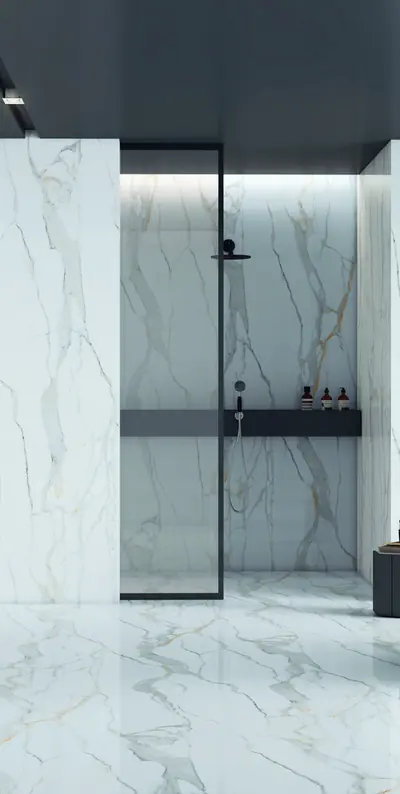
The district has kept innovating ever since: first with more efficient bodies and firing, then with porcelain stoneware, digital decoration and large slabs. Today a Sassuolo tile can faithfully reproduce marble, wood or stone while delivering the technical performance of an engineered material.
The production process
How a porcelain stoneware tile is made
From quarry to box, every tile goes through eight stages. Select a stage to see what happens inside the factory.
Raw materials
It all starts with a blend of clays, feldspars and quartz sands. The clays make the mix workable, the feldspars melt during firing and make it dense, and the sands give it structure. The raw materials come from Italian and foreign quarries and are carefully dosed: the recipe of the body determines a tile's colour, strength and water absorption.
Milling
The raw materials are finely ground, usually wet, in large drum mills filled with grinding media. The result is the slip: a fluid, perfectly even suspension of water and very fine powders.
Spray drying
The slip is sprayed into a tower filled with hot air. The water evaporates almost instantly, leaving a granular powder with very little moisture. These granules are the ideal "flour" for pressing, because they flow easily and fill the mould evenly.
Pressing
The powder is compacted by hydraulic presses at extremely high pressure, which give the tile its shape. Large slabs are made with continuous compaction technologies that allow huge sizes in reduced thicknesses.
Drying
Freshly pressed, the "green" tile still holds some water and is fragile. It then passes through dryers, where it loses the remaining moisture and gains the strength it needs for the next stages.
Glazing and digital decoration
Engobe and glazes are applied to the surface. Then comes digital inkjet printing: print heads, much like those in an office printer, lay down ceramic inks and reproduce the veins of marble, the knots of wood or the grain of stone, with so many variations that each tile differs from the one next to it.
Firing in a roller kiln
The tiles travel on rollers through kilns tens of metres long, where the temperature rises above 1,200 °C. The feldspar melts and closes the pores: the result is porcelain stoneware, dense and with water absorption that, by standard, does not exceed 0.5%.
Sorting, rectifying and packing
Every tile is inspected: optical systems and operators check for defects, shade (the colour batch) and calibre (the actual size). Tiles are graded as first or second choice and, where required, rectified: the edges are ground perfectly straight to allow very thin grout joints. Finally they are packed, with shade and calibre printed on the box.
Made in Sassuolo
Why Sassuolo tiles are a byword for quality
The value of Sassuolo ceramics is not a secret recipe but a concentration of know-how. In the district, tile makers work side by side with the engineers who design the machines, the colour houses that develop glazes and inks, and the laboratories that test the materials. Every innovation travels from one company to the next in very little time.
Tiles are classified and tested to international standards, such as ISO 10545 for test methods and EN 14411 for classification. In practice, that means measurable data on water absorption, breaking strength, frost resistance, stain resistance and wear.
Over the years the district has also invested in sustainability: recovering production waste, reusing process water and controlling emissions are now part of everyday manufacturing.
How to recognise a good tile
- Water absorption
Porcelain stoneware stays below 0.5%: it resists frost and stains, so it also works outdoors.
- Slip resistance
Classes R9 to R13 describe grip underfoot: R9 for dry interiors, R10–R11 for bathrooms, stairs and outdoor areas.
- Rectified or not
Rectified edges allow 2 mm joints and continuous surfaces; natural edges need slightly wider joints.
- Shade and calibre on the box
For one room, use tiles from the same batch: matching shade and calibre guarantee even colour and size.
Sassuolo ceramics today
From hand-crafted decor to large slabs
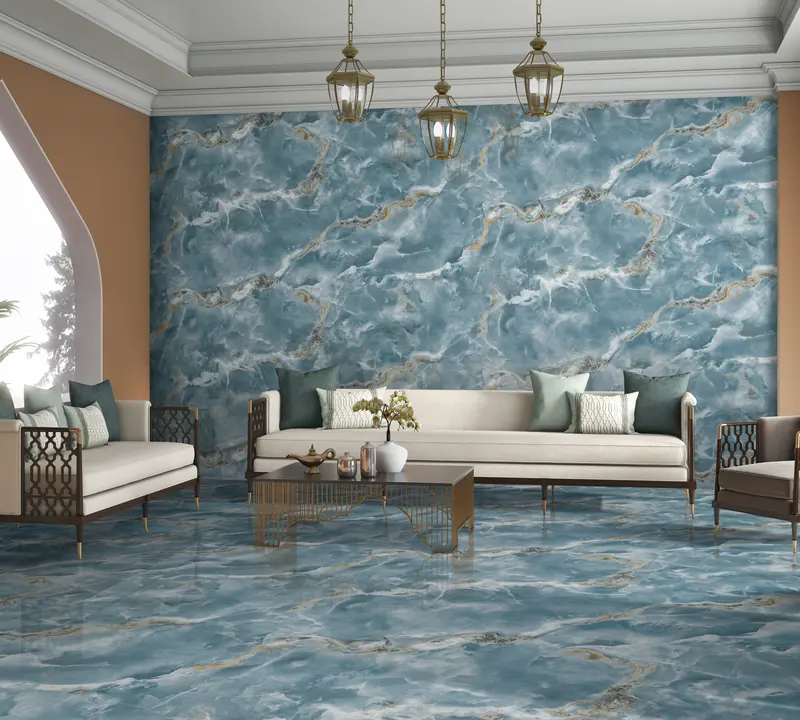
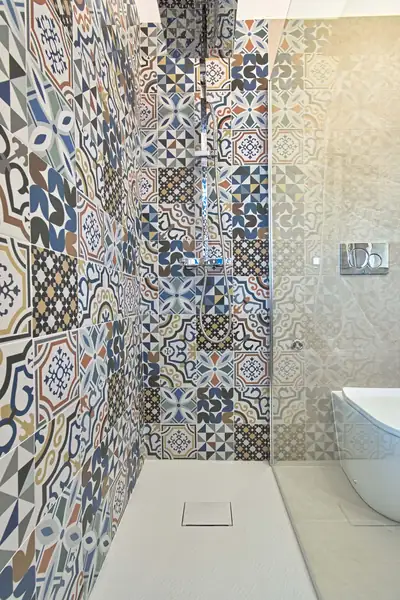
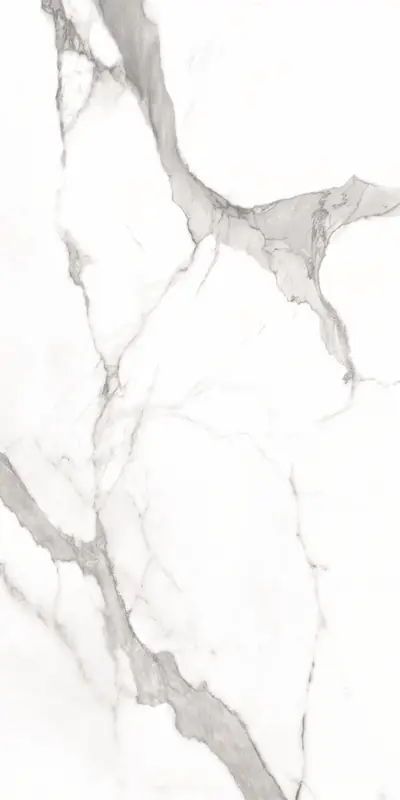
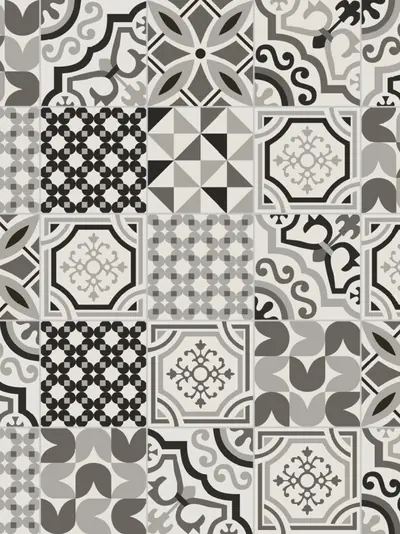
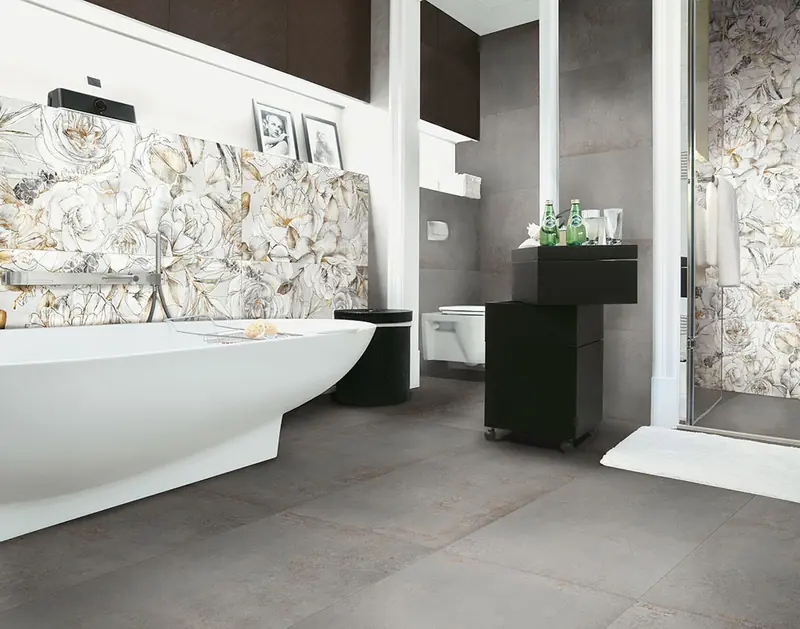
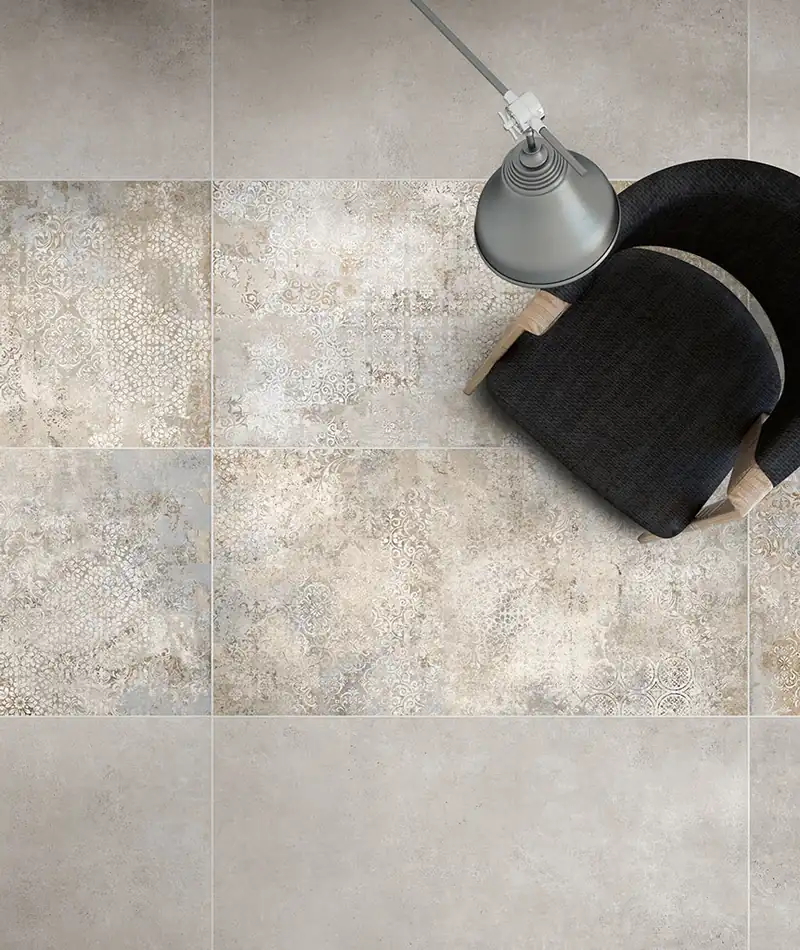
The district's technology makes it possible to reinterpret the majolica tradition and, at the same time, to produce huge surfaces that look like natural stone.
From the district to your door
Buying Italian ceramic tiles from Sassuolo, wherever you live in Europe
Buying close to where tiles are made has real advantages: fewer steps between factory and customer, access to collections and special offers that rarely reach high-street showrooms, and advice from people who handle these materials every day.
Ceramiche Sassuolo works exactly this way. Since 2010 it has been selling porcelain stoneware floor and wall tiles online, both Italian-made and imported, from its base in Castellarano, right in the district. The online shop is also available in English, and you can write to the team by email or call them to discuss your project.
Ordering from abroad
How an international tile order works
Tiles are heavy, bulky and fragile, so an order is never a one-click purchase. Every order goes through a quote, which makes sure you receive the right quantity, from a single batch, delivered in a way that suits your site.
Tiles travel on pallets with Palletways, a network specialised in express palletised freight, and shipments are insured. Ceramiche Sassuolo delivers to 24 European countries; other destinations can be assessed on request. Delivery times and transport costs depend on the destination country and on the quantity, and are always set out in your quote.
Details on transport and orders are on the shipping page and in the FAQ of Ceramiche Sassuolo.
Four steps to your delivery
- Choose
Browse the shop by effect or size and note the products you like, with the square metres you need.
- Ask
Contact a consultant by email or phone: they check availability, quantities and whether the tile suits your room.
- Get your quote
Materials and transport to your address in one document. Order everything at once, plus a few spare tiles from the same batch.
- Receive the pallet
Tell us about access and unloading in advance. On arrival, check the number of packages and note any damage on the delivery note before signing.
Frequently asked questions
Sassuolo ceramics: common questions
Where is the Sassuolo tile district?
In Emilia-Romagna, northern Italy, between the provinces of Modena and Reggio Emilia along the Secchia river. Besides Sassuolo it includes towns such as Fiorano Modenese, Maranello and Formigine on the Modena side, and Castellarano, Casalgrande and Scandiano on the Reggio Emilia side.
Why is Sassuolo famous for ceramics?
Its ceramic tradition goes back to 1741, when a majolica factory was founded in Sassuolo. After the Second World War the area grew into an industrial district specialised in floor and wall tiles, and today it is one of the world's leading centres for ceramic tile production.
What is porcelain stoneware?
Porcelain stoneware, known in Italy as gres porcellanato, is a type of ceramic made from clays, feldspars and quartz sands, pressed at very high pressure and fired at high temperature. The result is very dense and absorbs almost no water (no more than 0.5% under the standard), so it resists frost, stains and wear.
What does rectified tile mean?
After firing, the edges of a rectified tile are ground so that they are perfectly straight and square. Rectified tiles can be laid with very thin grout joints, giving a more continuous surface.
Can I buy Sassuolo tiles if I live outside Italy?
Yes. Ceramiche Sassuolo, based in Castellarano in the heart of the district, has been selling porcelain stoneware floor and wall tiles online since 2010 and delivers to 24 European countries. You choose the products, a consultant checks quantities and availability, and you receive a quote that includes transport.
How are tiles shipped abroad?
Tiles travel on pallets with Palletways, a network specialised in express palletised freight, and shipments are insured. Delivery times and transport costs depend on the destination country and on the quantity ordered, and are set out in your quote. Destinations outside the 24 countries served can be assessed on request.
More answers on shipping and orders in the Ceramiche Sassuolo FAQ.